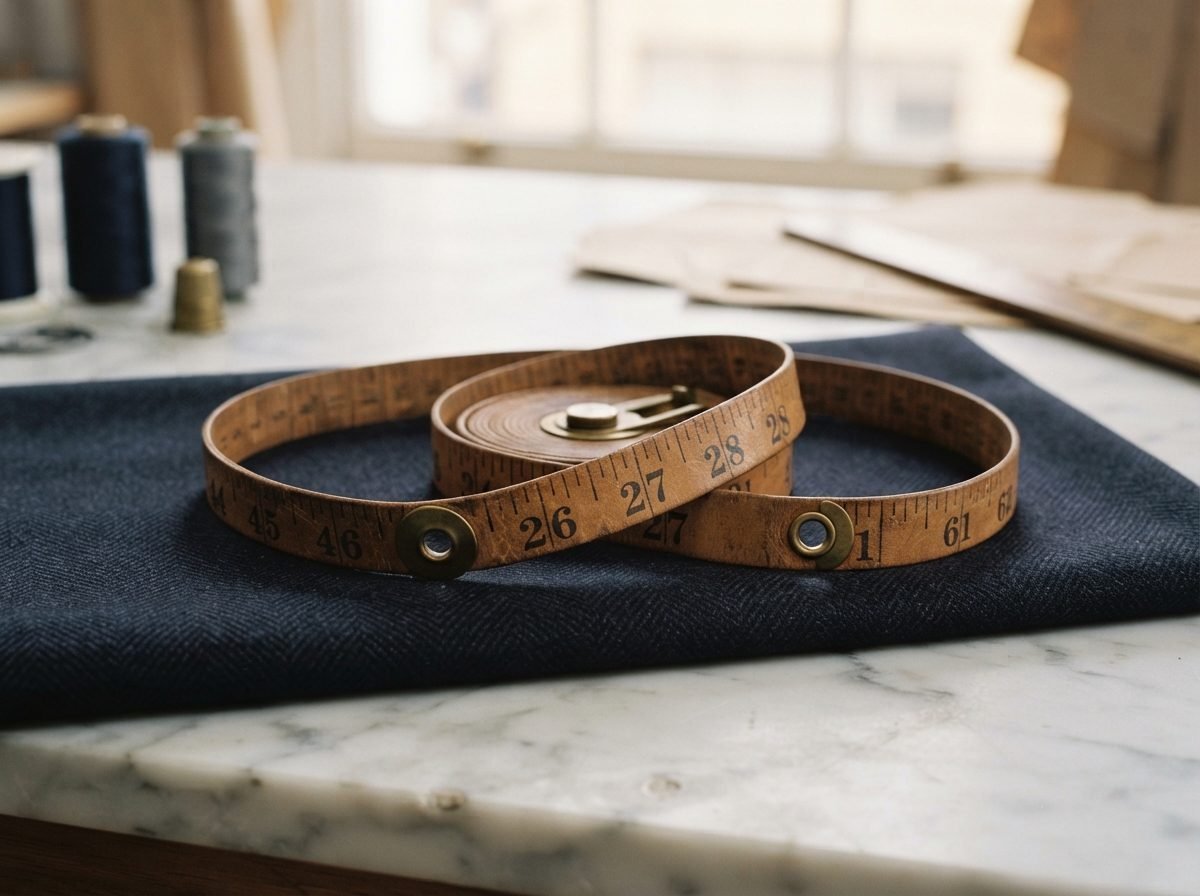
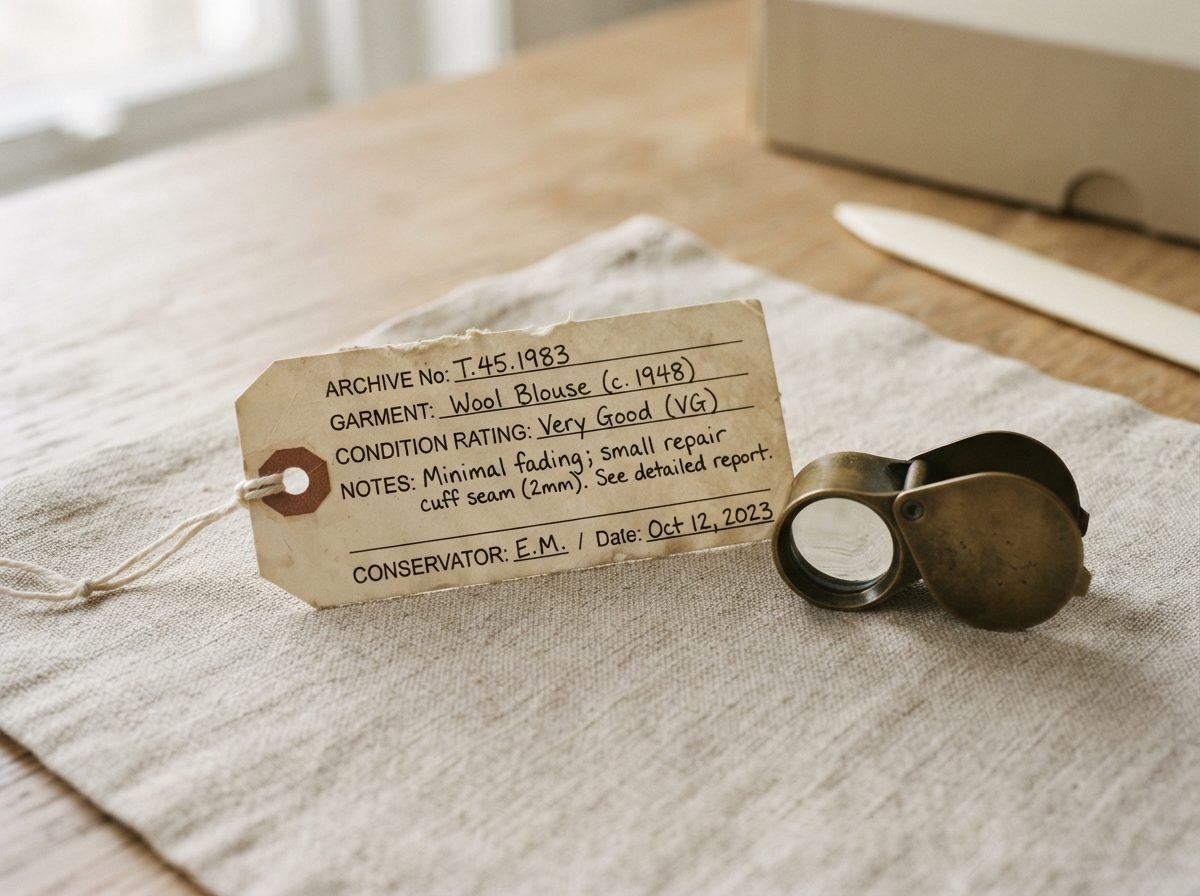
A size 40 from 1994, a size 40 from 2004 and a size 40 from last season are three different garments. Patterns were graded differently, shoulders were cut differently, and vanity sizing has quietly inflated labels for thirty years. The number on the tag is a habit, not a measurement.
Four numbers, one comparison
Every piece in the archive carries pit-to-pit, total length, shoulder span and sleeve length, taken flat with the garment buttoned and smoothed. To use them, take the same four measurements on a garment you already own and love, and compare. That is the entire method, and it is more reliable than any fit guide.
- Lay the garment flat on a hard surface. Not a bed, not a sofa — soft surfaces add an inch of fiction.
- Button or zip it closed before measuring so the front edges sit where they will sit on you.
- Measure to the half inch at most. Anything more precise is false confidence.
Where people go wrong
The most common mistake is comparing pit-to-pit with a body measurement. Pit-to-pit is a flat half-measurement of the garment, so a jacket with a 22 inch pit-to-pit has roughly 44 inches of chest circumference, plus or minus ease. The second most common mistake is ignoring shoulder span, which matters more than chest for how a jacket actually sits.
If a seller cannot tell you the pit-to-pit measurement, they cannot tell you whether it fits.
What we do about it
We measure every piece by hand, then photograph the tape in place for anything unusual. If a number looks inconsistent with the size on the label, we note it rather than smoothing it over, because the number is what you are actually buying.