Cashmere is one of the few materials where the cheap version and the expensive version look identical on a hanger. The difference shows up in month six, not in the fitting room.
Ply before brand
Ply is the number of yarn strands twisted together before knitting. Two-ply cashmere holds its shape and resists pilling far better than single-ply, which is why almost every sweater that disappoints you after a winter is single-ply. Four-ply is dense, warm and heavy enough to hang properly on the body.
Hold a sweater up to a window. If you can see through it easily, walk away regardless of the label.
Seams tell you how it was made
- Fully fashioned knitwear is knitted to shape and linked at the seams. You will see a slight, neat step at the shoulder rather than a cut edge.
- Circular or seamless bodies have no side seams at all, which means nothing to twist or rub.
- Cut-and-sew panels are cheaper to produce. Not automatically bad, but they should not be priced like fully fashioned work.
How we restore a pre-loved sweater
Pilling is not damage, it is loose fibre rising to the surface. We remove it with a proper cashmere comb and a light steam, never a razor, which cuts the fibre and creates the next round of pills. Cuffs and collars are reshaped by hand while damp and dried flat.
Never hang cashmere. A hanger will stretch the shoulders and break the yarn faster than ten winters of wearing it.
Storage that adds years
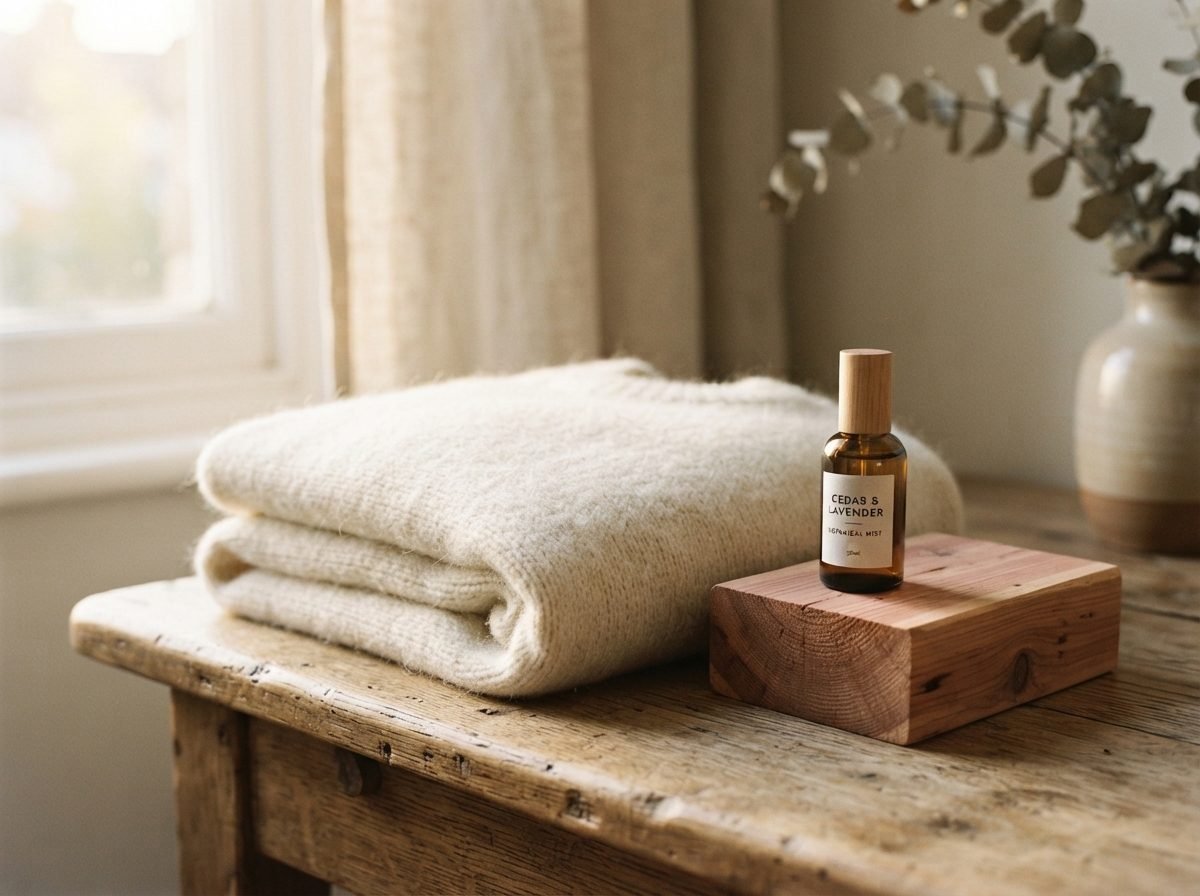
Fold flat in acid-free tissue, add cedar, and keep it out of direct sun. Wash it rarely — spot clean and air instead — and when you do, use cool water and a pH-neutral wool wash, then dry flat on a towel. A well-kept four-ply sweater will outlive most of the wardrobe you bought alongside it.